

Professional services automation
Professional Services Automation: The Complete 2025 Guide
Published on 12 November 2025
Reading Time: 15-mins
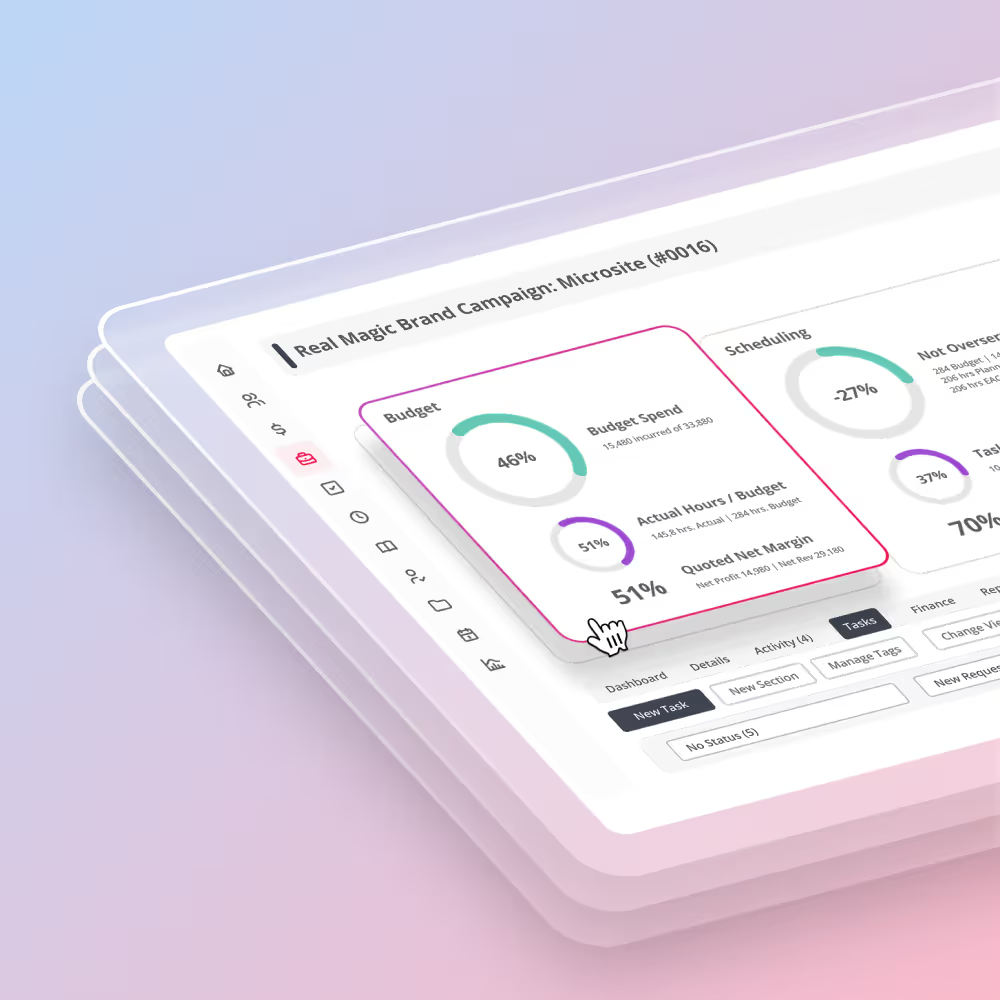


If you're ready to turn operational complexity into a competitive advantage, Magnetic can help you do it. Faster, cleaner and with far less friction.
Running a professional-service business today means navigating complexity on every front: Hybrid teams, shrinking margin, rising client expectations and a tech stack full of tools that don't talk to each other. What used to be manageable on spreadsheets now costs time, money and focus.
Every lost hour, missed approval and disconnected data point erodes margin. The firms winning in 2025 aren't those working the hardest, they are those working smarter powered by unified automation
This guide will show you:
Professional services automation software is built specifically for organisations that deliver projects for clients: agencies, consultancies, architects, engineers and in-house professional-services teams. It unifies project management, resource planning, time tracking, billing, forecasting and analytics into one connected platform.
Think of it as the operating sysem for service delivery: everything from sales pipeline to invoice lives inside one ecosystem, eliminating re-keying and giving leaders real time insight into performance.
Early-generations tools in the 2000's were finance centric ERP's that treated projects like manufacturing batches. Then came a wave of project management apps that focused on tasks but ignored profitability. Modern PSA combines both worlds -Financial discipline + operational agility and is now evolving further with AI-assisted forecasting and predictive scheduling.
PSA serves firms from 20 people to 2,000+ adapting through modulatr features and automation depth.
Remote delivery, subscription billing and outcome-based pricing have made manual oversight impossible. PSA creates one source of truth that powers data-driven predictable growth.
Without PSA, you're managing people, with PSA, you're managing performance.
A complete PSA solution contains eight core modules that together create end-to-end visibility and control.
Where strategy becomes execution.

A marketing agency converts proposals directly into live projects saving 5-hours of set up time per client.
Your people are your margin. Resource planning ensures every hour is applied optimally.

An engineering firm was able to improve utilisation by 14% simply because they had clear visibility into how their resources were being used . See also: Resource Capacity Planning
Billing connects effort to revenue. PSA Eliminates the friction between delivery and finance.
A consulting firm cut its month-end billing cycle from 10 days to 2. Instead of manually pulling and auditing timesheets to generate invoices, jobs and tasks automatically link to projects.
A PSA platform turns delivery data into financial intelligence.

A 50 person consulatancy modelled two pricing scenarios and increased quarterly margin by 9%
Information without insight is just data.

Modern PSA Systems use predictive analytics to flag projects at risk before they miss deadlines or budgets.
Automation keeps work moving without manual nudges.

A design agency saves two hours per project by auto-generating handoffs from sales to delivery.
See also: How to automate the project handoff process
No Platform lives in isolation

A Software Development Consultancy integrated PSA software with Xero, streamlining financial workflows and allowing the team generate quotes and estimates without manual reconciliation
Leadership, finance and delivery all operate from the same data model. Dashboards consolidate real-time performance: Projects at risk, top clients by margin, utilisation by regoin.
The latest generation of PSA tools uses machine learning to optimise forecasting and scheduling.
A well implemented Professional Services Automation (PSA) platform transforms how a services firm operates. It creates a connected, automated infrastructure that continuously improves utilisation, visibility and financial control.
The result: A business that runs with precision, predictability and focus.
Every hour of unbilled time erodes Margin. PSA eliminates the blind spots that cause it - connecting schedules, forecasting and delivery so leaders can see where every hour is going and rebalance workloads before capacity is wasted.
When resource planning and forecasting are automated, teams are neither underused, nor overloaded. over time this consistency compounds: even a 5-10% gain in utilisation can deliver six-figure revenue improvements without additional headcount.
Traditional firms operate on lagging indicators: projects run, hours get logged, invoices go out. finance reconciles weeks late. PSA inverts that sequence by tying billing directly to project progress.
Revenue forecasts update automatically as devliery happens. Finance gains real-time visibility into recognised revenue, WIP, and projected margin, reducing cash-flow uncertainty and smoothing quarterly forecasts.
This level of predictability transforms financial planning. CFOs can forecast within 2-3% variance, rather than estimating from last months spreadsheets. When project progress and revenue recognition live in the same system, financial control becomes proactive instead of reactive.
PSA brings leadership, operations, finance and delivery into a single data model. Instead of working from four different versions of the truth, every team seems the same live metrics:
The operational impact is profound. Decision latency - the time between identifying and issue and acting on it drops from weeks to hours.
The responsiveness is what separates efficient firms from those perpetually keeping up.
Manual billing is one of the most expensive and error-prone processes in service delivery. PSA Automates approvals, consolidates time entries and generates invoices from completed milestones or logged hours.
What used to take days of reconcilliation can not happen in hours. Finance teams can bill continuosuly, rather than at month end - improving both cash collection and client trust.
Automated partial billing for longer projects also helps maintain predictable revenue streams without waiting for full completion.
Automation creates space for higher-value work. By removing manual handoffs, duplicate data entry and endless internal status updates, PSA can save an average of 4-6 hours of admin per employee per week.
That time compounds quickly: across a 100-person firm, thats the equivalent of adding 10-12 full time productive days every week - without a single hire.
Beyond efficiency, automation also improves accuracy and morale. Teams can focus on delivery, not reconciliation.
Growth exposes the limits of manual systems faster than anything else. As teams expand and project volumes multiply, spreadsheets and isolated tools collapse under their own weight.
PSA provides the opposite: standardised workflows, centralised data, and repeatable processes that scale linearly. It allows a 30-person firm to grow into a 300-person firm without 10x administrative burden. Automation ensures that when the business scales, visibility and efficiency scale with it.
Operation clarity doesn't just service clients - it serves teams.
When PSA automates low-value admin work and balances workloads intelligently, employees gain back control of their time and focus.
Predictable scheduling, fewer manual updates and clear performance data reduce burnout and frustration. People can see how their work contributes to outcomes - a major driver of engagement and retention.
Firms that adopt PSA report lower staff turnover, stronger culture alignment and faster onboarding as processes become intuitive and consistent.
Every firm today faces the same operational pressures: squeezed margins, hybrid teams, rising client expectations. The difference between those that thrive and those that struggle isn't talent or opportunity - it's operational maturity.
PSA-driven automation is what enables maturity. It replaces reaction with foresight manual effort with insight and scattered tools with unified performance.
Rolling our PSA is an organisation-wide project. Follow these steps for a smooth, value-driven transition.
Clarify why you're implementing PSA: Higher Utilisation, faster billing, better visibility. Set SMART targets (e.g. "Increase billable utilisation by 8% within 90 days).
Document how projects move today, from sales to delivery to invoice. Identify bottlenecks, redundant handoffs and manual reports. The process map becomes your blueprint for automation.
When evaluating tools consider the following:
Garbage in = garbage out. Audit client, project and financial data before migration. Standardise naming, currency and rate structures.
Start with one team or department. Train power users first, gather feedback, refine workflows , then scale.
Best practices:
Resistance is natural. Address it directly.
After launch, monitor KPIs monthly: Utilisation, billing time, project margin. Use PSA analytics to identify new automation opportunities.
Modern PSA software is the connective tissue of the entire Service Firm Ecosystem
When a deal closes, the PSA auto-creates a project, assigns resources and sets budgets, without any manual setup. Benefits: clean hand-offs, accurate pipeline forecasting, faster project starts..
Invoices, revenue recognition, and cost data flow automatically to finance. Controllers get real-time visibility into WIP and AR.
Slack/Teams notifications keep communication contextual. Updates live where work happens.
Sync staff availability, leave and cost rates to keep forecasts accurate.
Feed PSA into BI tools like Power BI and Looker for advanced reporting or board-ready dashboards
When every system shares data with PSA at the center , you achieve real-time operational clarity - the holy grail of services management.
Here's how todays platforms categorise
Lightweight tools (Asana, Clickup, Monday.com) that have added time tracking, invoicing or resource management extensions.
.svg)

Mid-market systems such as Acello or Kantata (formerly Mavenlink) target firms with 20-200 employees

Magnetic, Operates squarely in this space, built for mid-sized growing services firms that need enterprise-grade visibility without operational complexity. It combines PSA depth (resource management, margin tracking, forecasting) with a modern, intuitive interface that teams actually enjoy using)
Enterprise-level systems such as FinancialForce, Kimble and OpenAir, offer deep EPR integration and advanced confirguration options.
The newest generation of PSA software represented by Magnetic and a small handful of of modern contenders combines project management, resource management, financials, CRM management and more into a single intelligent platform.
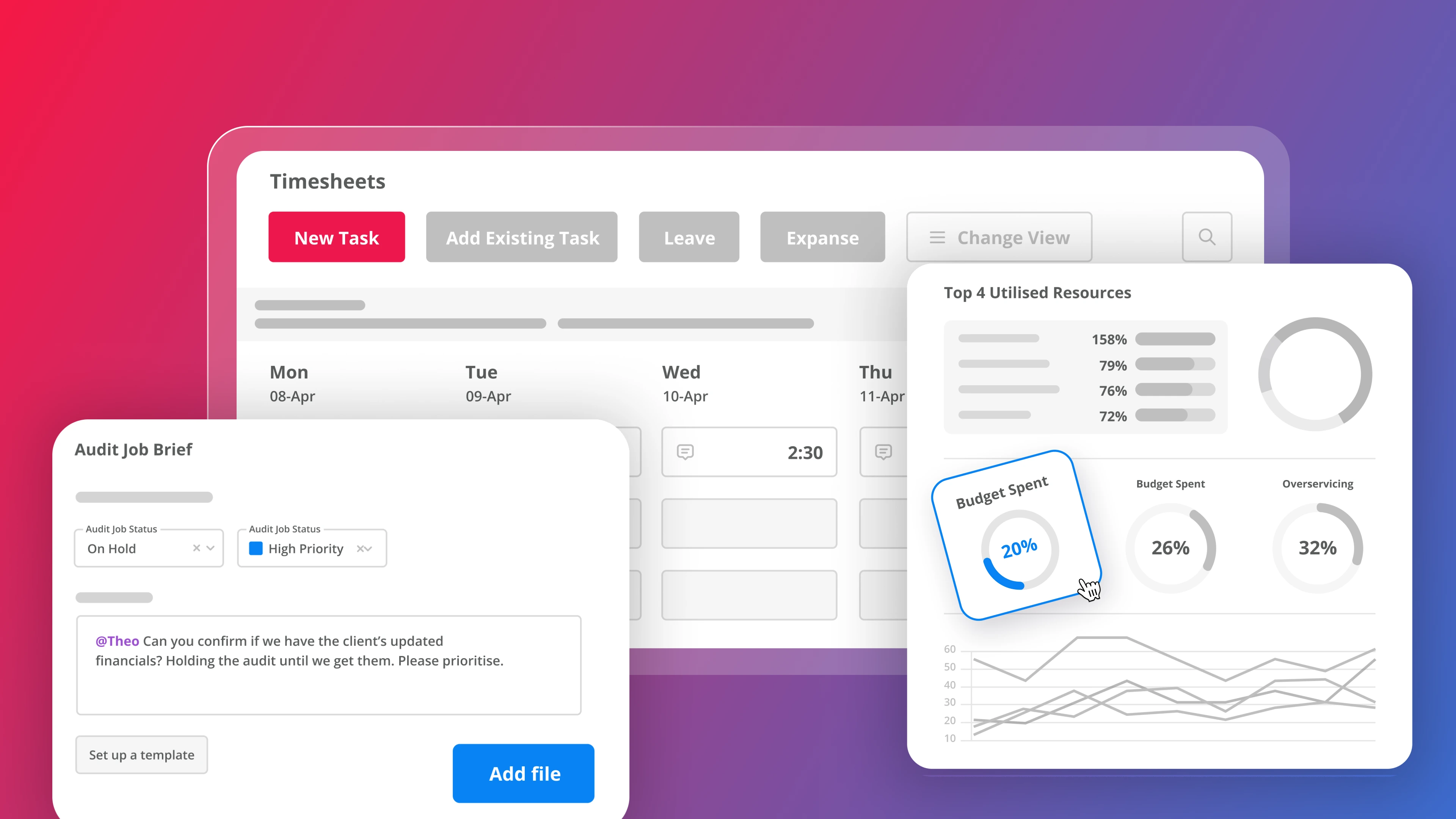
Numbers are powerful, but stories make them real. Below are condensed case studies of drawn from Magnetic clients - each showing how professional services automation creates measurable impact
From Fragmented Tools to Full Visibility
Exonic replaced multiple disconnected systems with Magnetics Unified PSA platform, gaining real-time insights and eliminating manual reconcilliation.
The result:
.svg)

Happy Friday: Scaling Delivery, Cutting Admin
With Magnetic's dynamic scheduling and multi-resource resource management, Happy Friday streamlined resourcing and removed duplicate effort.
The Result:

Automating for Accuracy & Scale
Chapu modernised operations by operating time, expenses and resource management with Magnetic.
The result:

Even with the right PSA solution, implementation and adoption isn't always smooth sailing. Many furms face similar hurdles during roll-out, from data migration issues to team resistance. The good news? These challenges are predictable, measurable and solvable with the right approach.
The table below highlights the most common pain-points firms encounter, why they happen and how to overcome them.

AI will anticipate resourcing bottlenecks weeks ahead, re-balancing work automatically to protect margins.
Usage and outcome data from PSA will feed dynamic pricing models linking profitability to value-derived.
Expect PSA, CRM and CPQ to merge into one platform , from first conversation to final invoice.
Conversational assistants will answer questions like "Which projects are over-budget this month?" and "who has capacity next week?" in seconds, without the need to dig through spreadsdheets or manual reconcile.
Anonymous industry data will let firms compare KPIs against peers instantly, driving smarter decisions.
Professional services automation has matured from a "nice-to-have" into the core competitive advantage. In 2025, firms operating without a PSA system are flying blind and burning margin every day.
The firms that win are the ones that connect sales, delivery and finance in real-time, that turn data into decisions, and free people to do their best work.
If you're ready to replace guesswork with clarity, automation and growth momentum:
1000's of global teams use Magnetic to bring clarity, consistency, and speed to their internal operations.




Magnetic is an all-in-one workflow management platform designed and built for professional services firms.